

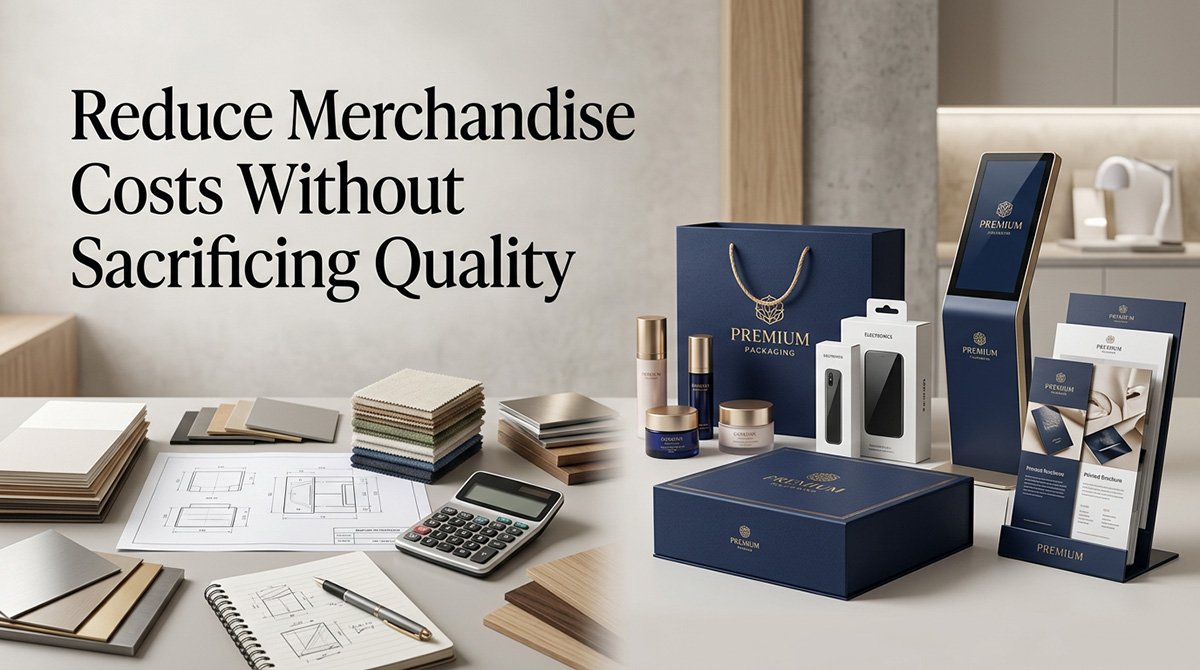
In 2026, brands face increasing pressure to control budgets while maintaining premium positioning.
Reducing merchandise costs does not mean lowering quality.
It means optimizing the production process strategically.
At DTL Merch, we help global brands lower production costs while protecting brand integrity and retail impact.
Here’s how.
1. Strategic Material Optimization
Material selection is one of the biggest cost drivers.
However, premium perception does not always require the most expensive material.
Examples of optimization:
- Alternative substrates with similar finish
- Smart thickness adjustments
- Sustainable materials with competitive pricing
- Engineered structural reinforcements instead of excess material
Proper engineering reduces waste without compromising durability.
2. Design for Production Efficiency
Good design saves money.
Poor design increases cost.
By involving production engineers early, brands can:
- Reduce complex assembly
- Optimize print layouts
- Improve packaging efficiency
- Minimize material waste
Design decisions directly influence cost.
3. MOQ & Volume Strategy
Understanding Minimum Order Quantity (MOQ) is essential.
Cost per unit decreases with higher volume — but overproduction increases storage and cash flow burden.
We analyze:
- Sales forecast
- Campaign duration
- Distribution strategy
- Regional rollout planning
Balanced production protects both budget and logistics.
4. Consolidated Supplier Management
Working with multiple independent vendors often increases:
- Communication delays
- Hidden markups
- Quality inconsistency
- Shipping fragmentation
An integrated partner streamlines:
- Supplier coordination
- Production oversight
- Quality control
- Global logistics
This reduces operational cost and risk.
5. Logistics Optimization
Shipping strategy significantly impacts cost.
We optimize through:
- Consolidated freight
- Proper carton engineering
- Warehouse staging
- Regional distribution planning
Small adjustments in packaging dimensions can create significant freight savings.
6. Early Planning Prevents Premium Rush Fees
Rush production often increases cost by 10–30%.
Strategic timeline planning avoids:
- Expedited factory charges
- Air freight premiums
- Last-minute material substitutions
Planning is cost control.
Why Smart Cost Optimization Protects Brand Value
Reducing quality damages brand perception.
Strategic cost engineering protects:
- Visual impact
- Structural integrity
- Compliance standards
- Long-term brand equity
At DTL Merch, we focus on cost efficiency — not cost cutting.
Conclusion
Cost reduction is not about sacrificing quality.
It’s about smarter sourcing, better engineering, and stronger supplier management.
When executed correctly, brands achieve:
- Lower unit cost
- Controlled budgets
- Maintained premium positioning
- Reliable production performance
Ready to Optimize Your Next Merchandising Project?
Let’s review your current production strategy and identify efficiency opportunities.
Contact Information
DTL Merch – Global Merchandising Experts
Wayson Commercial Building
28 Connaught Road West
Sheung Wan, Hong Kong
📞 +852 5132 6901
📧 contact@dtl-merchandising.com
Frequently Asked Questions (FAQ)
1. How can I reduce merchandise costs without lowering product quality?
Cost reduction should focus on optimization, not cutting corners. Strategic material alternatives, improved structural engineering, volume planning, and logistics consolidation can significantly lower costs while maintaining durability and brand standards.
2. Does producing in China automatically reduce costs?
Not automatically. Cost savings depend on supplier certification, production oversight, quality control, and logistics planning. Without structured management, hidden costs and quality risks can eliminate potential savings.
3. What is the biggest factor affecting merchandise production cost?
The main cost drivers include:
- Material selection
- Production volume (MOQ)
- Structural complexity
- Packaging design
- Shipping method
Early-stage design and planning decisions have the greatest impact on final cost.
4. How does MOQ (Minimum Order Quantity) impact pricing?
Higher volumes typically reduce unit cost. However, overproduction increases storage expenses and cash flow pressure. A balanced MOQ strategy aligned with sales forecasts ensures cost efficiency without waste.
5. Can packaging design reduce shipping costs?
Yes. Carton dimensions, weight distribution, and packaging engineering directly affect freight charges. Optimized packaging can significantly reduce transportation costs without impacting product protection.
6. Is cheaper material always lower quality?
Not necessarily. Many cost-effective material alternatives deliver similar durability and visual impact when properly engineered. The key is selecting materials strategically based on performance requirements.
7. How early should I plan merchandise production to avoid extra costs?
Ideally, planning should begin 3–6 months before campaign launch. Early preparation prevents rush fees, air freight premiums, and last-minute production changes.
8. Why work with an integrated merchandising partner instead of multiple vendors?
An integrated partner streamlines:
- Supplier management
- Quality control
- Timeline monitoring
- Logistics coordination
This reduces operational complexity, hidden markups, and production risk.