

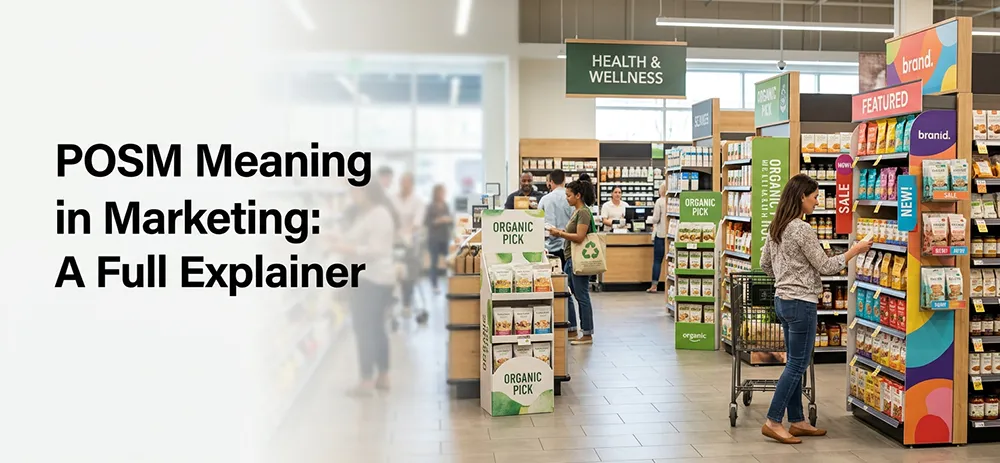
If you’ve ever wondered about the POSM meaning in retail, you’re not alone. Brands across the U.S. use point of sale materials every day to capture attention and drive in‑store conversions. But what does POSM mean in marketing, and how does it differ from POS or POP?
In simple terms, POSM meaning refers to promotional materials placed at retail touchpoints to influence purchase decisions. Often discussed within POSM in marketing, these tools include display stands, shelf talkers, wobblers, counter displays, and other retail POS materials designed to improve visibility and engagement.
You may also hear the term point of purchase materials or comparisons like POSM vs POS and POSM vs POP. Understanding these differences helps brands optimize shopper marketing strategies and create stronger retail activations.
In this guide, we’ll break down:
- The full POSM meaning
- Common POSM examples
- How POS displays support retail growth
- Why POSM matters in retail marketing
- The difference between POSM, POS, and POP
What Does POSM Mean in Marketing?
The POSM meaning stands for Point of Sale Materials. These are branded promotional tools positioned near checkout areas or key retail touchpoints to encourage last‑minute purchasing decisions.
When asking what does POSM mean in marketing, the answer goes beyond signage. POSM includes:
- Shelf talkers
- Danglers
- Wobblers
- Shelf strips
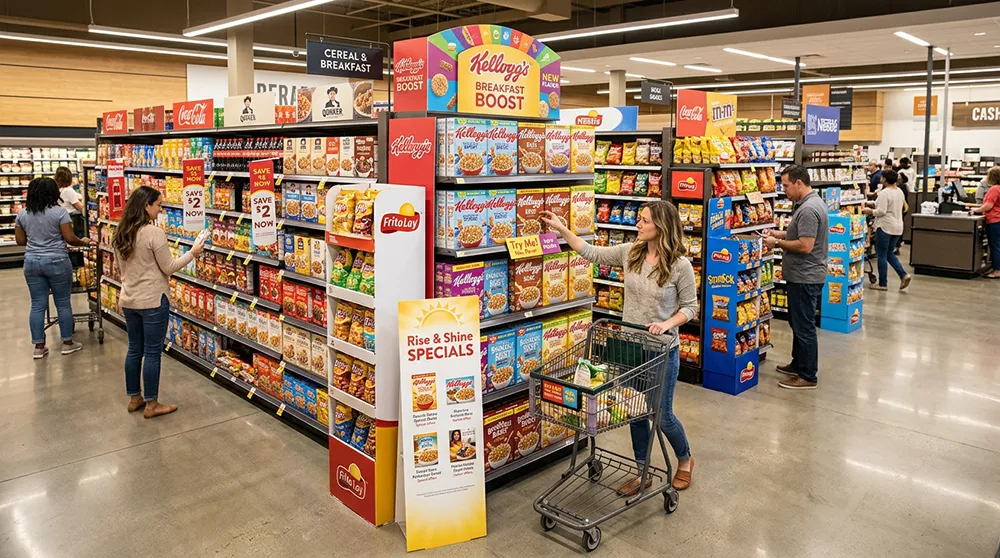
- Display stands
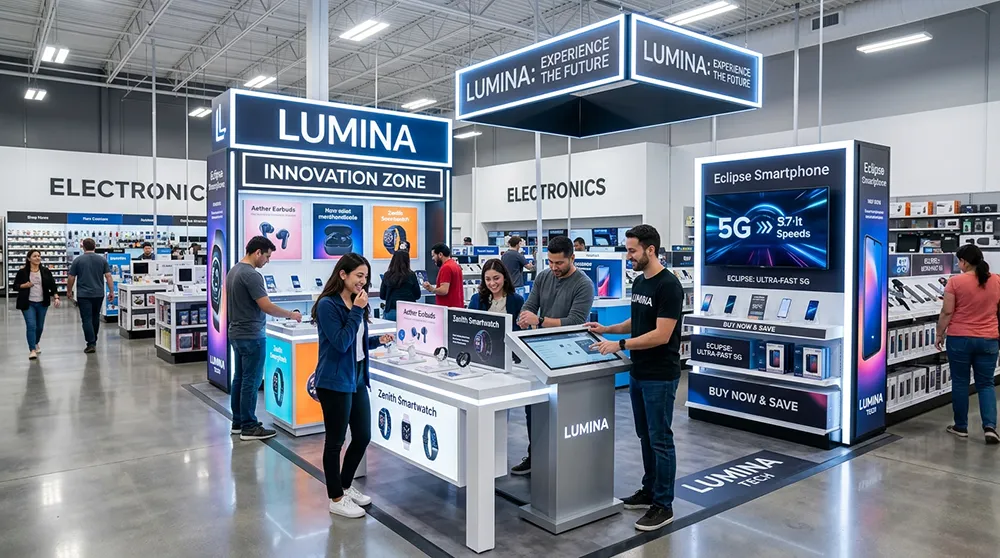
- Counter displays
- Floor stands
- Endcaps
- Posters
- Promotional packaging
- Temporary POS displays
These materials are critical in POSM in marketing because they bridge the gap between product visibility and customer action. Unlike traditional advertising, POSM targets shoppers at the moment of decision — making it one of the most powerful forms of in‑store persuasion.
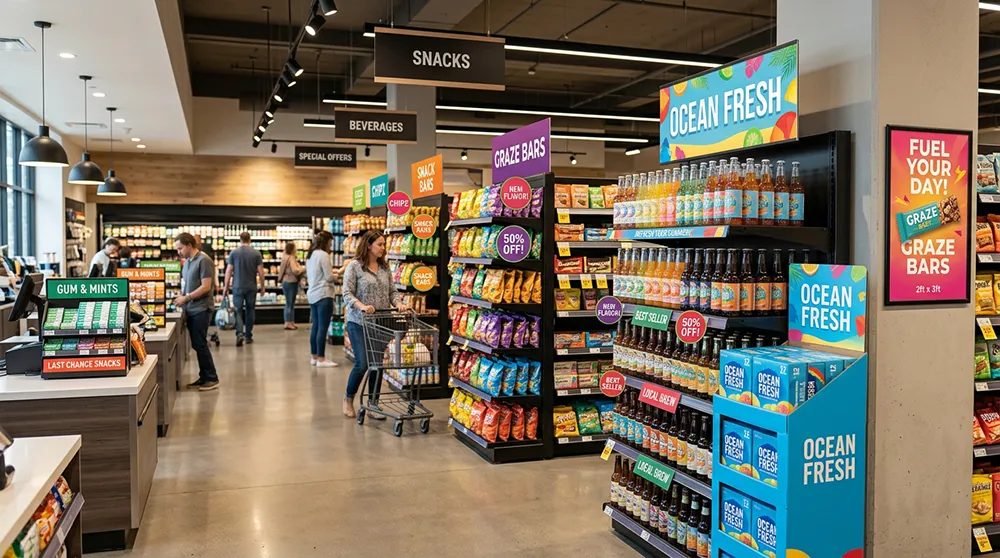
POSM Examples in Retail Stores
Understanding real POSM examples helps clarify how brands use these tools in physical stores.
Here are some of the most common retail POS materials used in U.S. retail environments:
1. Shelf Talkers & Shelf Strips
Small printed materials attached to shelves that highlight pricing, promotions, or product features.
2. Wobblers & Danglers
Hanging promotional pieces that move slightly to attract attention — ideal for high‑traffic aisles.
3. Display Stands & Floor Stands
Freestanding branded structures that showcase new or promotional products.
4. Counter Displays
Compact promotional units placed near checkout areas to drive impulse buys.
5. Endcaps
Product displays positioned at the end of aisles — prime retail real estate.
6. Posters & Signage
Visual communication tools supporting product storytelling and promotional messaging.
These POS displays form a critical part of shopper marketing strategies, especially during product launches and retail activations.
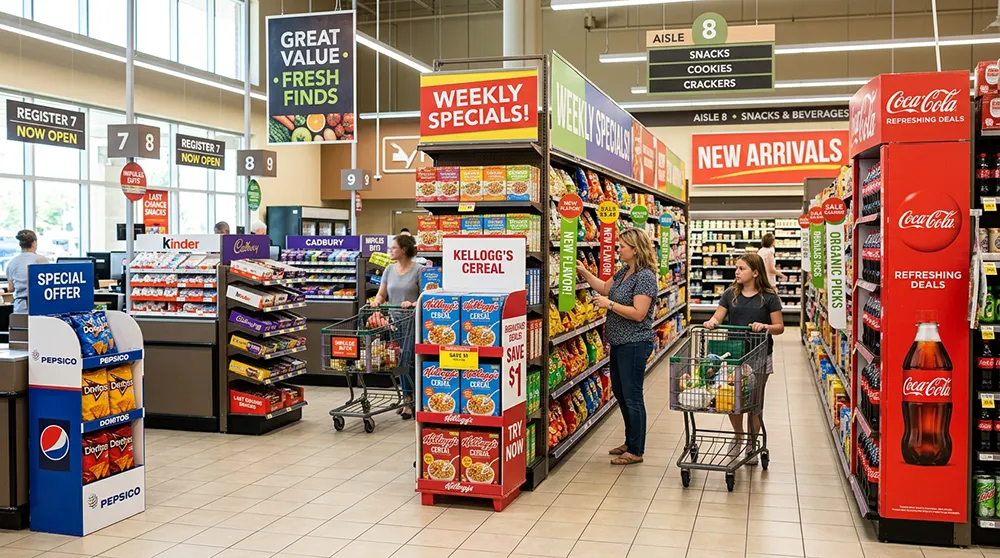
POSM vs POS: What’s the Difference?
A common confusion is POSM vs POS.
POS: Point of Sale
Refers to the actual transaction system — cash registers, payment terminals, or checkout counters.
POSM (Point of Sale Materials)
Refers to the promotional materials placed around the transaction area to influence buying behavior.
So when comparing POSM vs POS, think of it this way:
- POS = Where payment happens
- POSM = What influences the purchase before payment
Both are important, but POSM focuses on visual persuasion and in‑store branding.
POSM vs POP Materials: Are They the Same?
Another frequently asked question is POSM vs POP Materials.
POP materials stands for Point of Purchase materials, which is very similar to POSM. In many cases, POP materials and POSM are used interchangeably.
However, subtle differences can exist:
- POP materials often refer to promotional tools placed anywhere within the store.
- POSM sometimes emphasizes materials located near checkout or high‑conversion zones.
In practice, brands combine both to maximize retail performance.
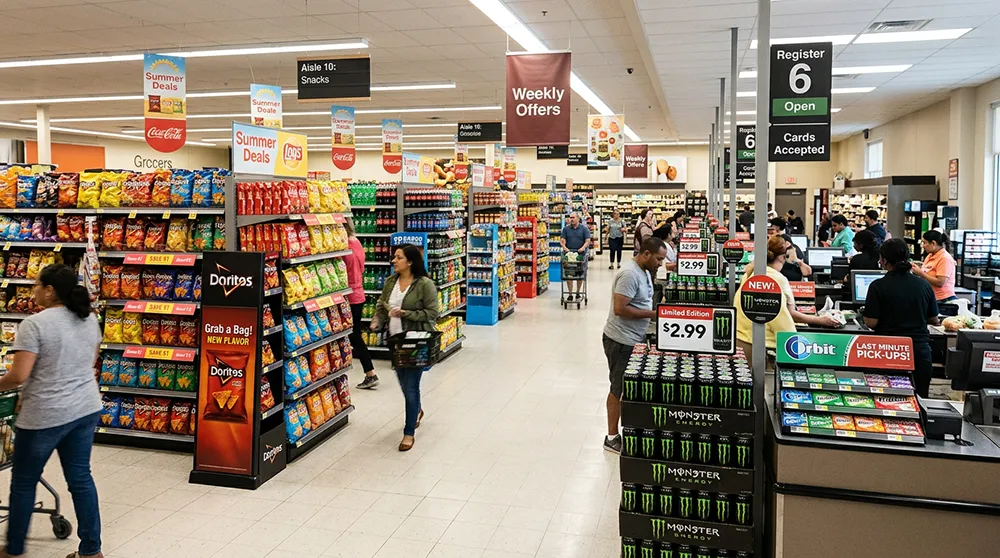
Why POSM Matters in Retail Marketing
Understanding why POSM matters in retail marketing is essential for brands competing in physical retail spaces.
POSM directly impacts:
1. Product Visibility
Retail shelves are crowded. POS materials ensure products stand out.
2. Shopper Engagement
Eye‑catching POS displays attract attention and increase dwell time.
3. Impulse Purchases
Strategically placed counter displays and endcaps drive spontaneous buying.
4. Brand Storytelling
Signage, posters, and shelf talkers reinforce messaging at critical retail touchpoints.
5. Campaign Effectiveness
Retail activations supported by POSM outperform standalone advertising.
Strong POSM in marketing increases conversion rates because it influences shoppers at the moment they are most ready to buy.
How POSM Supports Shopper Marketing Strategies
Modern shopper marketing relies heavily on point of sale materials.
Brands use POSM to:
- Support seasonal promotions
- Launch new SKUs
- Reinforce price messaging
- Promote bundle offers
- Enhance visual merchandising
When aligned with broader retail strategy, POSM becomes a measurable sales driver rather than just decoration.
For expertly produced POS displays and retail fixtures, explore professional Point of Sale Materials (POSM) services.
Integrating POSM with Visual Merchandising
POSM works best when integrated with broader store design.
Combining POS displays with strong visual merchandising solutions enhances:
- Store layout flow
- In‑store design cohesion
- Promotional consistency
- Customer experience
For example:
- Window displays introduce the campaign
- In‑store POS materials reinforce it
- Endcaps and counter displays convert it
This creates a seamless retail journey from awareness to purchase.
Beyond POSM: Supporting Retail Merchandise & Promotions
POSM often complements:
- Custom Retail Merchandise solutions
- Branded Promotional Merchandise
- Seasonal product launches
- Global retail rollouts
When promotional merchandise, retail display units, and POS materials align, brands build cohesive retail environments that drive measurable growth.
Final Thoughts: The Real Impact of POSM Meaning in Retail
The true POSM meaning goes far beyond simple signage. It represents a strategic retail tool designed to influence behavior at critical decision points.
From shelf talkers and wobblers to endcaps and floor stands, point of sale materials remain one of the most cost‑effective tools in modern retail marketing.
Understanding:
- What does POSM mean in marketing
- Key POSM examples
- The difference between POSM vs POS
- The nuance of POSM vs POP
- And why POSM matters in retail marketing
… gives brands a competitive edge in physical retail environments.
When executed correctly, POSM transforms passive browsing into active buying — making it an essential pillar of U.S. retail strategy.
Frequently Asked Questions
What does POSM mean in marketing?
The POSM meaning stands for Point of Sale Materials. These are promotional tools placed at retail touchpoints to influence customer decisions at the moment of purchase. POSM includes materials such as shelf talkers, display stands, counter displays, and signage that increase product visibility and drive in-store conversions.
What are common POSM examples?
Common POSM examples include:
- Shelf talkers
- Wobblers and danglers
- Display stands
- Endcaps
- Counter displays
- Floor stands
- Posters and signage
These retail POS materials are used to highlight promotions, support retail activations, and improve shopper engagement inside stores.
What is the difference between POSM vs POS?
When comparing POSM vs POS, the difference is simple:
- POS (Point of Sale) refers to the checkout system where transactions happen.
- POSM (Point of Sale Materials) refers to promotional materials placed near or around that checkout area to influence buying behavior.
POS handles the payment process, while POSM supports marketing and sales conversion.
Is POSM the same as POP materials?
POSM and POP materials (Point of Purchase materials) are often used interchangeably. However, POP materials may refer to promotional displays located anywhere inside the store, while POSM sometimes emphasizes materials positioned closer to the checkout or high-conversion areas.
In most retail environments, the terms overlap significantly.
Why does POSM matter in retail marketing?
Understanding why POSM matters in retail marketing is crucial for brands competing in physical stores.
Effective point of sale materials:
- Improve product visibility
- Encourage impulse purchases
- Strengthen brand messaging
- Support shopper marketing campaigns
- Increase in-store engagement
When integrated with visual merchandising and promotional strategy, POSM becomes a measurable driver of retail sales growth.